Canada Federal Tax Calculator 2026
A free calculator for Canadian employees who want to see federal tax, payroll deductions, and registered account capacity in one view. Built for households balancing RRSP deductions, TFSA contributions, and the newer First Home Savings Account. Enter your gross employment income and we will show federal tax owed, CPP and EI contributions, available registered room, and your real net take-home pay. Provincial tax is modelled separately inside the full calculator.
What this calculator handles
- 2026 federal income tax brackets indexed to inflation
- CPP base and CPP2 enhanced contributions to the second earnings ceiling
- Employment Insurance premiums to the annual maximum
- Basic personal amount of $16,452 phased down for high earners
- RRSP deduction room at 18% of earned income up to $33,810
- TFSA annual contribution of $7,000 and accumulated lifetime room
- FHSA annual contribution of $8,000 with a $40,000 lifetime cap
2026 Federal Tax Brackets
Federal tax in Canada is progressive. Each bracket applies only to income earned within that range. Provincial tax adds a separate progressive schedule on top of these numbers.
| Rate | Taxable income |
|---|---|
| 14% | $0 to $58,523 |
| 20.5% | $58,524 to $117,045 |
| 26% | $117,046 to $181,440 |
| 29% | $181,441 to $258,482 |
| 33% | $258,483 and above |
RRSP vs TFSA: Which Should You Max First?
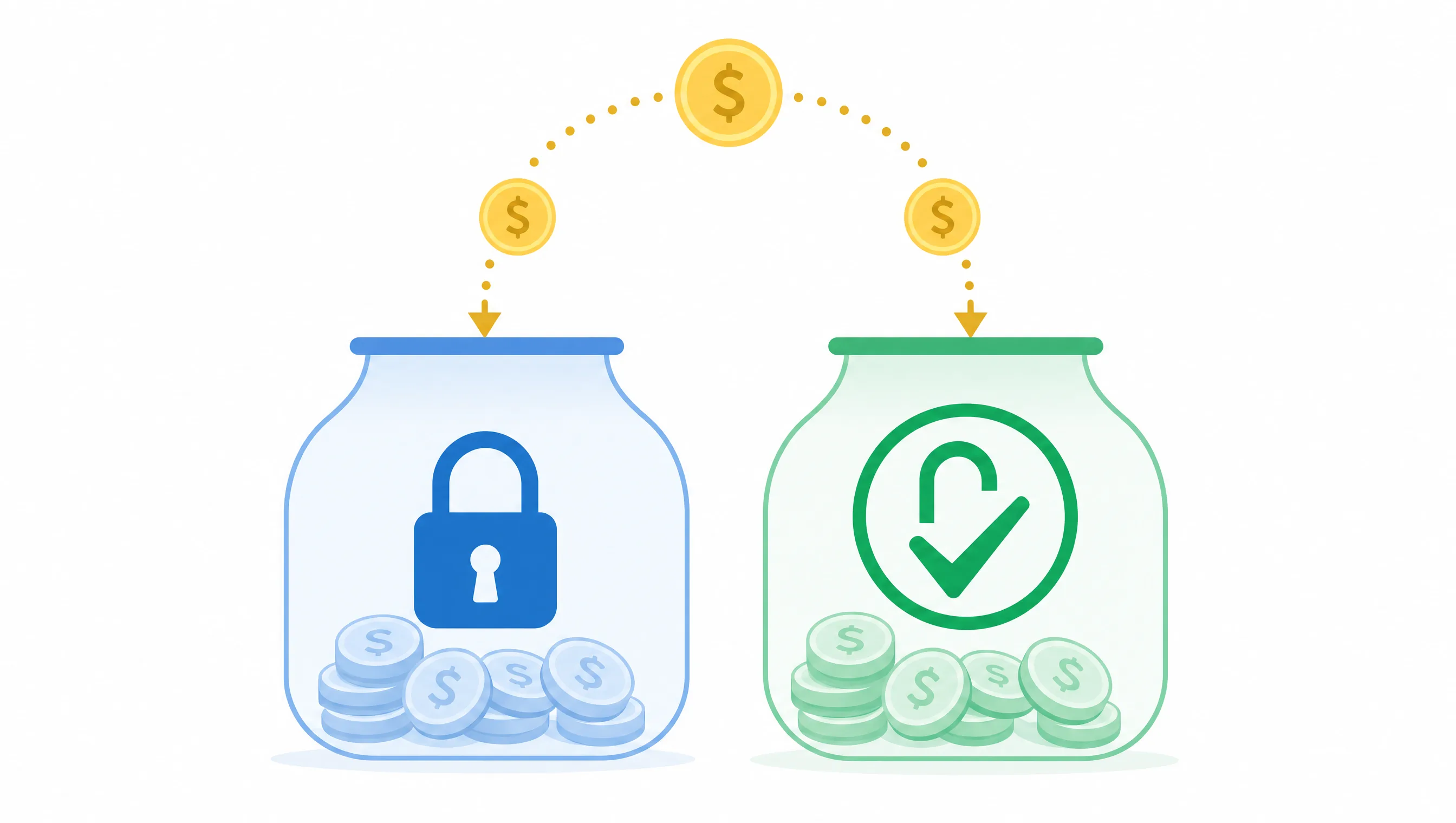
An RRSP gives you a tax deduction today at your current marginal rate, defers tax on investment growth, and taxes every dollar of withdrawal at your future ordinary income rate. A TFSA does not produce a deduction, but contributions, growth, and withdrawals are all completely tax-free, and withdrawn amounts restore room in the following calendar year.
The right order depends on the spread between your marginal rate today and your expected retirement bracket. For a higher rate earner above $111,734 the RRSP usually wins on a pure tax arbitrage, because the deduction is taken at 26% federal or higher and withdrawals can later be drawn at 20.5% or 15%. For workers earning below the third bracket, or those who expect a comfortable retirement income, the TFSA is often the stronger first call. Above both, the FHSA changes the calculus again for anyone who has not yet bought a home.
The FHSA: Canada's Newest Tax Advantage
The First Home Savings Account combines the best feature of an RRSP, an upfront tax deduction, with the best feature of a TFSA, fully tax-free qualifying withdrawals. You can contribute up to $8,000 per calendar year to a lifetime limit of $40,000. Unused room carries forward by up to $8,000 per year once the account is opened.
Funds used to buy a qualifying first home come out entirely tax-free, including any investment growth. If you never use the funds for a home purchase, the balance can be transferred into your RRSP without affecting your RRSP contribution room, preserving the original deduction. For most first time buyers under 71 the rational first action is to open the account immediately, even with a $0 contribution, to start the contribution room clock running.
Learn the moves
Short explainers and guides on keeping more of what you earn.
RRSP vs TFSA
Which Canadian account to fill first.
Take-Home Pay Explained
What actually lands in your account.
Tax Brackets 2026
UK, US and Canada rates side by side.
All Tax-Sheltered Vehicles
Every account across UK, US and Canada.

Salary Sacrifice Explained
How to cut income tax and National Insurance at once.
401(k) vs Roth IRA
Which account saves you more, and when.