UK guide
Company Car Tax (BIK) Explained: UK 2026/27
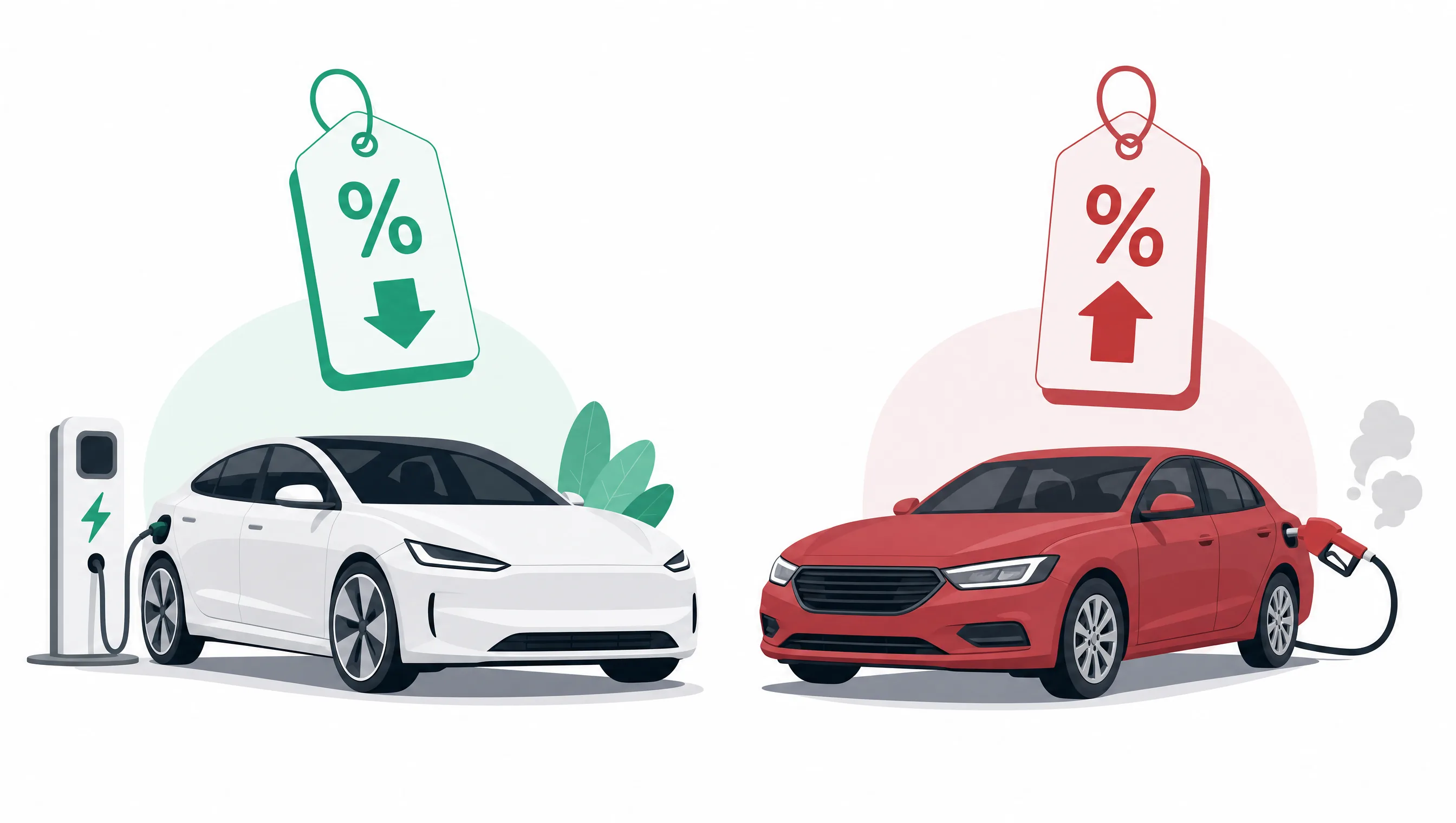
A company car is a taxable Benefit in Kind. HMRC adds a notional cash value to your earnings, and you pay income tax on that value at your marginal rate. The cash value is set by the car's list price, its CO2 emissions, and for plug-in hybrids the electric-only range. For the 2026 to 2027 tax year electric cars sit at a 3% BIK rate, which is why salary sacrifice EV schemes have become the largest single tax-saving lever many UK employees can pull.
How company car tax works
The calculation is short. Multiply the car's P11D value by the BIK percentage to get the taxable benefit. Multiply that by your marginal income tax rate to get the annual tax bill. The P11D value is the list price including VAT, delivery, and factory-fitted options, with the first £5,000 of capital contributions deducted.
A worked example. A £40,000 petrol car with a 28% BIK rate, driven by a higher-rate (40%) taxpayer, produces an annual tax bill of £40,000 x 0.28 x 0.40 = £4,480 per year, deducted through PAYE. The same car driven by a basic-rate (20%) taxpayer would cost £2,240 per year.
Fuel benefit is separate. If your employer pays for private fuel, HMRC adds a flat-rate Car Fuel Benefit Charge on top of the company car BIK. For 2026/27 the multiplier is £27,800, so a 28% BIK car triggers a fuel benefit of £7,784 taxed at your marginal rate.
BIK rates for 2026/27
The rate ladder rewards low emissions and electric range. Pure electric cars and plug-in hybrids with long electric range sit at the bottom. Diesel cars without an RDE2 compliance certificate add a 4% supplement, capped at 37%.
| CO2 emissions | BIK rate |
|---|---|
| 0 g/km (pure electric) | 3% |
| 1 to 50 g/km, electric range 130+ miles | 3% |
| 1 to 50 g/km, electric range 70 to 129 miles | 5% |
| 1 to 50 g/km, electric range 40 to 69 miles | 8% |
| 1 to 50 g/km, electric range 30 to 39 miles | 12% |
| 1 to 50 g/km, electric range under 30 miles | 14% |
| 51 to 54 g/km | 15% |
| 55 to 59 g/km | 16% |
| 60 to 89 g/km | 17 to 20% |
| 90 to 129 g/km | 21 to 27% |
| 130 to 159 g/km | 28 to 35% |
| 160 g/km and above | 37% (cap) |
The Autumn 2022 Budget announced annual 1 percentage point rises for electric and ultra-low emission vehicles from 2025/26 onwards, with the EV rate reaching 5% by 2027/28. The rates above are the headline 2026/27 set published by HMRC.
Why electric cars win on BIK
The 2% rate on pure electric cars is the single largest BIK gap in the UK tax code. A £50,000 electric car costs a basic-rate taxpayer £50,000 x 0.02 x 0.20 = £200 per year in tax. A higher-rate taxpayer pays £400 per year. The same list-price car with a 35% BIK rate would cost £3,500 (basic) or £7,000 (higher) per year.
| Car at £50,000 P11D | Basic rate (20%) | Higher rate (40%) |
|---|---|---|
| Pure electric, 2% BIK | £200/yr | £400/yr |
| Petrol, 28% BIK | £2,800/yr | £5,600/yr |
| High-emission petrol, 35% BIK | £3,500/yr | £7,000/yr |
| EV saving vs 35% BIK | £3,300/yr | £6,600/yr |
Salary sacrifice EV schemes
Salary sacrifice for EVs stacks two reliefs. First, the gross salary you sacrifice escapes income tax and National Insurance, just as a pension contribution would. Second, the company car you receive in exchange is taxed only at the 2% BIK rate. The combined effect is a heavily discounted lease backed by the tax code.
A typical scheme leases a £45,000 EV at around £500 per month gross salary sacrifice. A higher-rate taxpayer paying 40% income tax and 2% NI sees a net cost of roughly £290 per month after salary tax relief, plus £30 to £45 per month of BIK at 2% for the year. The total runs well below the equivalent personal lease, and the lease usually bundles insurance, servicing, and tyres.
The mechanics of the sacrifice itself are covered in our salary sacrifice guide.
Calculate your full UK tax position
The calculator models salary sacrifice, pension contributions, and ISA capacity alongside PAYE and National Insurance. Add a company car BIK figure to the taxable benefits field to see the all-in monthly tax cost.
Open the UK calculator